


Pacific Biomedical
Clinical Resources
Written by L.J. Relle, BBA, NRP, FP-C, CCP-C, Clinical Manager at Pacific Biomedical and a career firefighter-paramedic. These guides are for trained EMS and clinical readers: how American EMS grew out of military medicine, how to work an altered patient with AEIOU-TIPS, and when a papoose board is protective stabilization. Each article cites its sources. None of them replaces local protocol, medical direction, or the manufacturer's instructions.
Reference Tools
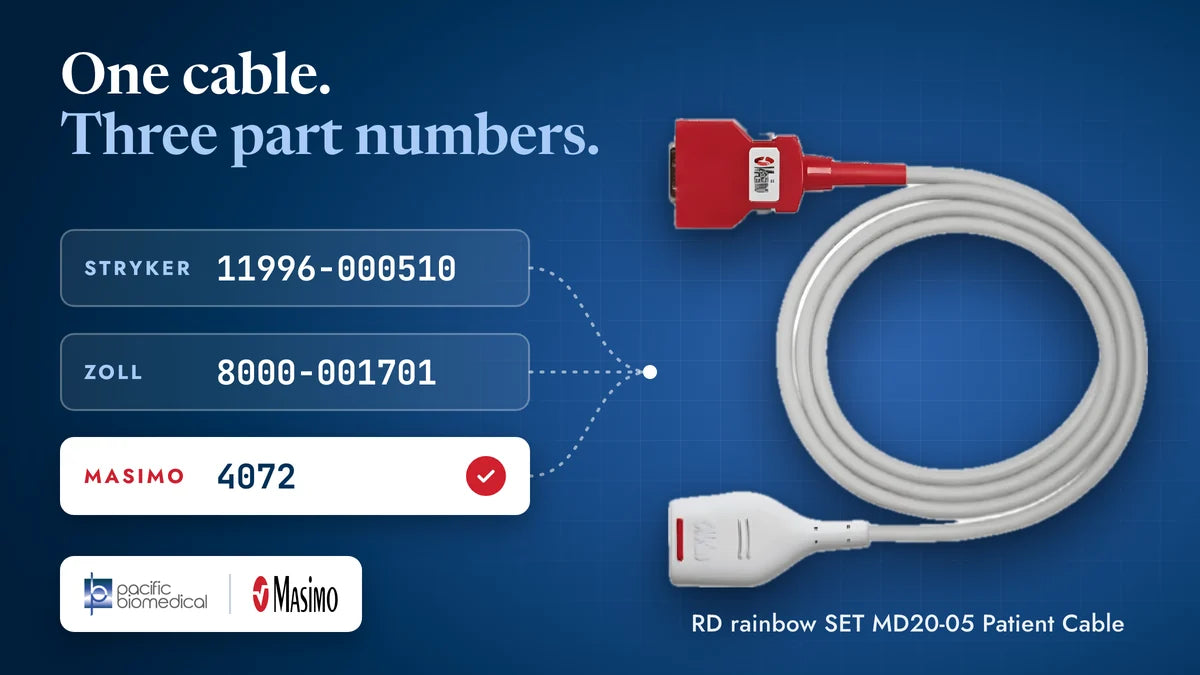
Masimo Part Number Cross-Reference
Type a Stryker/Physio-Control, Zoll, Philips, GE, Mindray, Dräger or distributor item number. See the genuine Masimo part, what it measures, the cable it needs and where to buy it.
Look Up a Part Number
FDA-Cleared vs Over-the-Counter Pulse Oximeters
A cleared pulse oximeter went through 510(k) and a low-oxygen test. A wellness or sports meter did not. What to check before you trust the number.

Papoose Board: Protective Stabilization, Safety & Consent
Is a papoose board a restraint? When protective stabilization is appropriate, informed consent, monitoring, safer alternatives, and how to choose a size.

AEIOU-TIPS Mnemonic: Altered Mental Status Guide for EMS
AEIOU-TIPS: what each letter means for altered mental status, what to check first (SpO2, glucose, rhythm), peds and older adults, and where to transport.

History of EMS: From Civil War Ambulances to Whole Blood
How U.S. EMS grew from military medicine: Letterman's ambulance corps, the 1966 White Paper, Freedom House, 911, paramedics, TCCC and whole blood.